
Good debt vs bad debt: Understanding the difference for your business


Debt…we get it. It sounds scary. But that shouldn’t always be the case.
You might have heard that being debt-free should be the goal for a healthy business. Borrowing can feel risky, and it’s natural to worry that taking on finance means you’ll somehow be perceived as struggling.
Yet, the reality is much more nuanced.
Many successful businesses use borrowing as a tool to invest, grow, and strengthen their finances.
The difference isn't simply whether you have debt — it's whether you're using the right type of borrowing in the right way.
We sat down with Deputy Director at First Enterprise, Danielle Davis, to get her expert insights into the debt dilemma and learn how debt can be put to good use.
Is debt always a bad thing?
According to Danielle, the answer is a clear no. She says: “Debt's not always a bad thing. In some cases it can be scary, and some people can take on the wrong type of debt, but there are a lot of great cases where debt is a really good thing. Where it has helped a business to grow or the right facility has been put in place that really allows businesses to get where they want to be.
“I appreciate there's a lot of stress that can come with debt as well, but I think if a business uses it strategically, then they can probably do all the things they want to do.”
Like any financial tool, borrowing isn't inherently good or bad. What matters is how it's used.
Why does debt have such a bad reputation?
Many people associate borrowing with financial difficulty.
“Sometimes with debt,” Danielle explains, “people might assume that either the business isn't doing very well or they haven't got very good cash flow. There can be a lot of negative stigma around either taking on or thinking about debt.”
This perception often prevents business owners from exploring finance that could genuinely help them move forward.
Ironically, many of the world's largest companies regularly use borrowing to fund expansion, invest in new equipment, develop products, and improve cash flow. Debt itself isn't the problem — using the wrong kind of debt can be.
What is good debt?
Good debt is borrowing that helps put your business in a stronger position than it was before.
As Danielle puts it: “Good debt is debt that is taken on strategically for the right purpose at the right time. You'll expect good debt to have a good outcome like maybe it helps increase revenue or grow the business or whatever you might want to achieve.”
In simple terms?
“It's the right product at the right time.”
Good debt often helps businesses:
Invest in new equipment
Recruit staff
Launch marketing campaigns
Expand into new premises
Fulfil larger customer contracts
Improve cash flow through refinancing.
The borrowing creates value that outweighs its cost.
What is bad debt?
Bad debt isn't necessarily about one particular type of loan.
Instead, it's borrowing that's poorly matched to what the business actually needs.
Danielle explains: “Bad debt is largely the wrong type of debt at the wrong time, for the wrong purpose, which can be anything from high-interest short-term debt that's taken to help working capital that should probably have been structured over a much longer period of time or somebody taking a term loan when they should be looking at an invoice finance or asset finance facility.”
Even a product that's right for one business could be completely wrong for another.
That's why understanding your options is so important.
So, what is smart debt?
If good debt is borrowing with a purpose, smart debt takes it one step further.
As Danielle describes it: “Smart debt is the most strategic. It's when a business has really had the time to look at what they need, they've spoken to different lenders, explored different products, and find the right product for them for what they want to achieve.”
Rather than accepting the first offer available, proactive borrowers compare products, understand the costs and choose finance that fits both their immediate needs and their long-term plans.
Can the same borrowing be both good and bad?
Absolutely.
Danielle believes almost every type of finance can either help or harm depending on how it's used, saying: “You have the classic high-interest, short-term loans that can be useful when quick finance is needed to be used as a bridge, but alternatively can create massive issues down the line.
“The same can be said of company credit cards. Are they being used strategically and in the right way? The same for a Business Loan or any facility really. The key is having the right facility, at the right time, for the right purpose.”
The product itself isn't the deciding factor. It’s about you and your overall business strategy.
Read more: Why fast finance isn’t always smart finance
When borrowing can genuinely improve your finances
One of the strongest examples Danielle sees is refinancing, commenting: “We deal with a lot of customers that deal with lots of short-term, high-interest debts that's stacked up with tens of thousands of pounds in monthly repayments. Refinance over five years frees up all of that cash flow on a monthly basis.”
Lower monthly repayments can give businesses breathing room, improve cash flow and create space to invest back into growth instead of simply keeping up with expensive repayments.
Borrowing to survive vs borrowing to grow
Many people think borrowing should only ever be for growth.
In reality, there are times when borrowing to stabilise a business is equally valuable.
Danielle explains the distinction: “Borrowing to survive is a lot more reactive, whereas borrowing to grow is proactive. Not to say that borrowing to survive is necessarily always a bad thing, if you have a plan to come out of it as a stronger business.”
She points to businesses trapped by expensive short-term borrowing: “We see a lot of businesses that do borrow to survive, where they are in a short-term, high-interest trap and they have no chance of surviving the current rates they are paying.
“So, in that scenario, they are borrowing from lenders like us to survive by refinancing and improving their cash flow. Which hopefully leaves them set to grow at the end of it.”
Sometimes the smartest move isn't chasing growth immediately, it's creating a stronger financial foundation first.
Don’t rush into borrowing, carefully consider your approach
Before applying for finance, Danielle encourages business owners to pause and ask themselves a few important questions: “The most important being what do I want to get out of this? What are the plans? Is it really affordable? And are they comfortable with the associated risks?”
She also recommends looking carefully at your forecasts.
“It's really important that they look at the cash flow and their projections to make sure that over the term of that debt they've got some headroom. They're not stretching themselves too thin and they've got that buffer to make sure that if something does go wrong that they can still afford to make any repayments.”
Good borrowing should strengthen your business, not leave it constantly under pressure.
It’s important that you take the time to find the right finance for your business.
No two businesses are the same, which means no single funding solution works for everyone.
That's why Danielle's biggest piece of advice is to take your time, saying: “Speak to as many people as you can. Whether it's banks, lenders, any organisation that might be offering a facility, really do your research, really understand the different products and how they might or might not work for you.”
If you're considering finance, don't just ask whether you should borrow. Ask whether you're choosing the right borrowing for the right reasons.
The right debt at the right time could help your business grow. Get in touch to discuss options
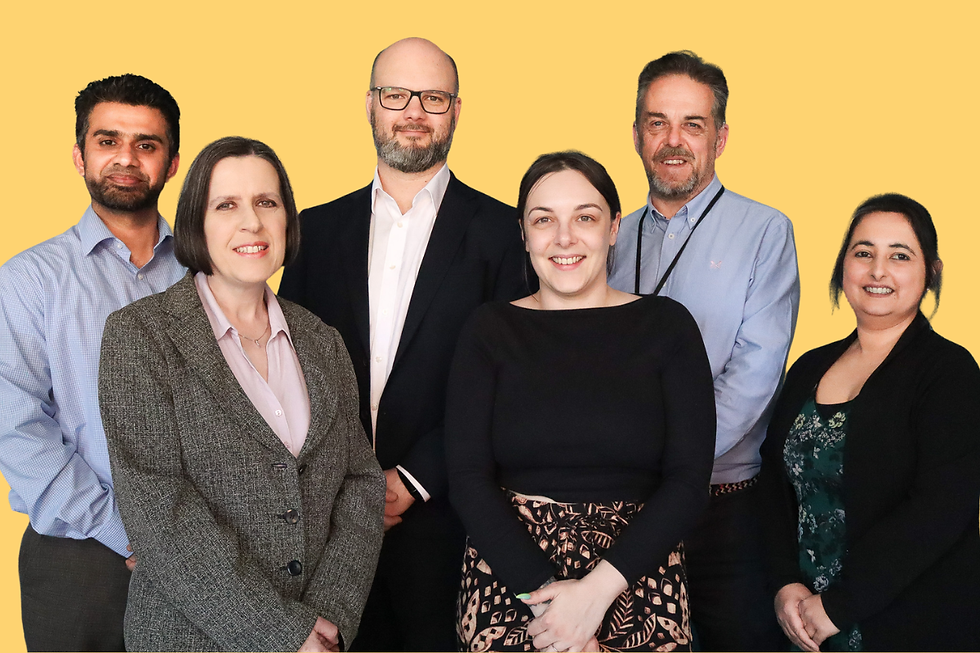
At First Enterprise, we take the time to understand your business, your ambitions, and your challenges before recommending a funding solution.
Whether you're looking to refinance expensive borrowing, invest in growth, or simply explore your options, our team is here to help you make informed decisions with confidence.
We’re here to smash the biggest myth about borrowing. That all debt is bad.
Danielle points to major corporations as an example, saying: “If you look at the big businesses that are out there, they're all using debt products to scale and grow.”
Ready to talk? Get in touch with our team today to discuss your business and discover whether the right finance could help you achieve your next goal. Simply complete the form below or give us a call at 0345 602 7355.
Remember, borrowing isn't a sign of failure.
When it's planned carefully and matched to your goals, it can be one of the tools that helps your business move to its next stage.


